Ledger.com/start: A Complete 1200-Word Beginner’s Guide to Setting Up Your Ledger Wallet
Setting up a Ledger hardware wallet is one of the most important steps you can take to protect your cryptocurrency. Hardware wallets are widely considered the gold standard for crypto security, and Ledger is one of the most trusted names in the industry. The setup process associated with Ledger.com/start is designed to walk users through initialization, security precautions, device verification, and the installation of Ledger Live, which serves as the main interface for managing your digital assets.
This guide offers a clear and detailed walkthrough of the entire process, from unboxing your new Ledger device to preparing it to store and transact crypto securely.
What Ledger.com/start Helps You Accomplish
Ledger.com/start is the official starting point for activating your Ledger hardware wallet. Since hardware wallets operate differently from online wallets and exchanges, this guided setup ensures new users understand:
How to initialize their device correctly
How to secure their recovery phrase
How to use Ledger Live safely
How to confirm that their device is authentic
How to install applications and add accounts
How to manage crypto assets securely
Ledger emphasizes user control and security, so learning the system from the beginning is essential.
Unboxing Your Ledger Hardware Wallet
When you unpack your Ledger device, you will typically see:
Your Ledger hardware wallet (Nano S Plus, Nano X, or a similar model)
A USB cable for connecting the device
A set of recovery sheets
Documentation for safety and instructions
Miscellaneous accessories depending on the model
Before you proceed, make sure the packaging looks intact. Ledger devices are engineered to resist tampering, but it’s important that the device comes from an authorized source to ensure safety.
Turning On the Device for the First Time
Power on your Ledger device using its physical buttons. You will use these buttons for navigation, selection, and confirmation during the entire setup process. The device’s small onboard screen is one of the most secure components—it displays trusted information that cannot be altered by malware or external software.
Once the device starts up, you will be asked whether you want to set up a new device or restore an existing one. If this is your first time using Ledger, choose the option to create a new wallet.
Setting Up Your PIN Code
One of the first security steps is creating a PIN code. This PIN protects the device if it is lost or stolen. You will need to enter the PIN every time you use the wallet, so choose something you can remember but that others will not easily guess.
A strong PIN should:
Be random and unpredictable
Avoid repeated digits or simple patterns
Stay private
Never be stored digitally
Entering the wrong PIN too many times resets the device, which protects the wallet from unauthorized access.
Understanding the Recovery Phrase
After choosing a PIN, your Ledger device will generate a recovery phrase, sometimes referred to as a seed phrase or backup phrase. This phrase is typically made up of a list of words that act as the master key to your wallet. Everything within your device—your accounts, private keys, and access rights—can be restored using this recovery phrase.
This is the most critical part of the setup process.
Follow these rules strictly:
Write the phrase down by hand on the provided sheet
Keep it in a secure, offline location
Never store it digitally
Never take photos or screenshots of it
Never share it, even with supposed support agents
Never type it into websites or apps
If your device is ever lost, damaged, or reset, your recovery phrase is the only way to regain access to your assets. Likewise, if someone else obtains your recovery phrase, they can take full control of your funds. This is why Ledger emphasizes its importance during the setup process.
Downloading and Installing Ledger Live
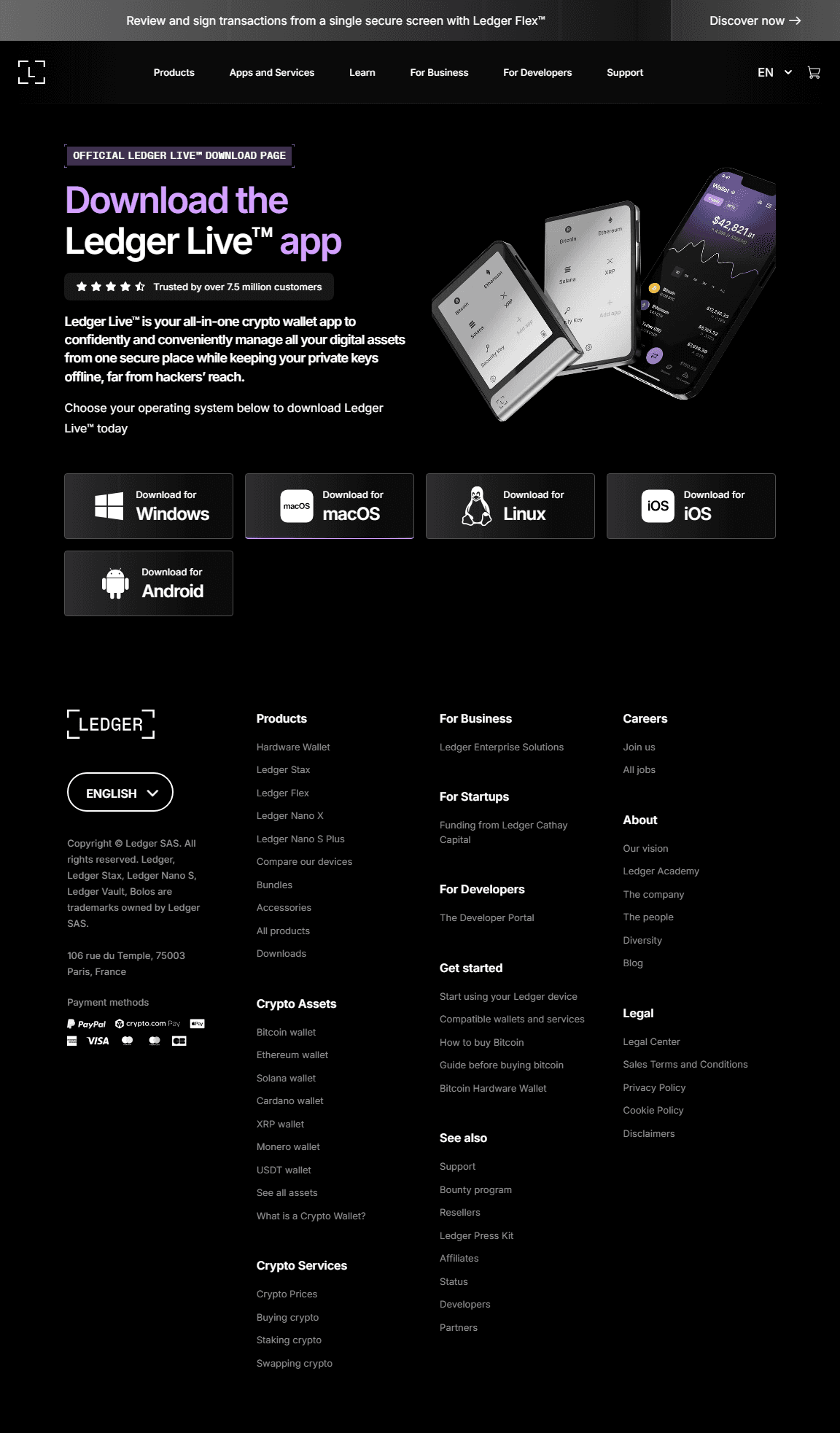
Ledger Live is the official application that lets you interact with your hardware wallet. While your private keys remain locked inside the device, Ledger Live helps you manage accounts, send and receive crypto, update firmware, and track your portfolio.
Once installed, Ledger Live will guide you through:
Pairing your hardware device
Verifying the authenticity of your device
Installing apps for the cryptocurrencies you intend to manage
Adding accounts to the dashboard
Ledger Live is essential to your daily crypto management and serves as the bridge between your hardware wallet and the blockchain.
Checking That Your Ledger Device Is Genuine
One of Ledger’s most important security features is its built-in authentication mechanism. When you connect your device to Ledger Live for the first time, the application will validate that your hardware wallet is genuine.
This step ensures your device hasn't been tampered with or modified by a third party. Since hardware wallets are highly sensitive security devices, authenticity verification protects you from unauthorized copies or compromised units.
Once your device passes the check, you can continue setting everything up with confidence.
Installing Crypto Apps onto Your Device
Each cryptocurrency requires an application installed on your Ledger hardware wallet. These apps allow the device to manage addresses, sign transactions, and interact with specific blockchains.
Inside Ledger Live, navigate to the app management section and select the apps you need. Examples include:
Bitcoin
Ethereum
Solana
Stellar
Polkadot
Avalanche
Dozens more
You can install, update, or remove apps whenever needed. Removing an app does not delete your crypto. Your private keys remain stored securely in the device.
Adding Crypto Accounts in Ledger Live
Once the necessary apps are installed, you can add corresponding accounts inside Ledger Live. For example, with the Bitcoin app installed, you can create a Bitcoin account.
These accounts allow you to:
View your balances
Track activity
Receive and send crypto
Monitor your holdings across different blockchains
The accounts are only interfaces—your keys remain secured by the device.
How to Receive Cryptocurrency Safely
To receive crypto:
Open the relevant account in Ledger Live
Select the option to receive
Generate a receiving address
Confirm the address on your Ledger device screen
Confirming the address directly on your hardware wallet is essential. If your computer were compromised, a hacker could change the address displayed on the screen. But they cannot alter what the Ledger device shows. Always rely on the device’s screen for the final verification.
How to Send Cryptocurrency Securely
Sending crypto works similarly but in reverse. Ledger Live prepares the transaction details, and your Ledger device displays them for final confirmation.
You must:
Confirm the amount
Validate the recipient’s address
Approve the transaction using the physical buttons
This process ensures no unauthorized transaction can take place without your direct consent.
Keeping Firmware and Software Up to Date
Both Ledger Live and your hardware wallet require periodic updates to maintain optimal security and functionality. Updating ensures:
Latest security enhancements
Expanded crypto support
Performance improvements
Bug fixes
The updating process is straightforward and guided through Ledger Live.
Troubleshooting Common Setup Issues
Device Not Detected
If your computer does not recognize the device:
Try a different USB cable
Switch ports
Restart Ledger Live
Restart your device
For Bluetooth-enabled models, ensure Bluetooth is turned on and pairing mode is activated.
Repeated PIN Errors
Too many incorrect PIN attempts trigger a reset. You can restore the device using your recovery phrase.
Firmware Issues
Make sure your cable connection is secure during firmware updates.
App Storage Limitations
Some devices have limited storage. You can uninstall apps without affecting your crypto.
Best Practices After Setup
Once your Ledger is fully set up, practicing good security habits ensures long-term protection.
Keep your recovery phrase safe, private, and offline
Never share your phrase with anyone
Always verify transaction details on the device screen
Only use official Ledger software
Avoid connecting your Ledger device to unfamiliar computers
Keep all firmware and software updated
Your hardware wallet is incredibly secure, but your habits determine its effectiveness.
Conclusion
The setup process associated with Ledger.com/start is designed to make cryptocurrency security straightforward, reliable, and accessible to everyone. By following the steps—unboxing the device, creating a PIN, securing your recovery phrase, installing Ledger Live, verifying authenticity, and setting up crypto apps—you create a highly secure environment for storing and managing your digital assets.
Ledger’s combination of offline key storage, physical confirmation, and secure software tools empowers you to control your crypto with confidence. Once the setup is complete, you are fully equipped to explore the world of digital assets while keeping security at the forefront.